What We Talk About When We Talk About Culture

Everyone agrees culture matters. Ask any executive, and they'll tell you it's critical to performance, essential for attracting talent, fundamental to strategy. Yet ask those same executives what culture actually is, and watch the conversation become strangely vague.
This vagueness isn't just academic. It's why so many cultural initiatives fail before they start. You can't change what you can't name.
The word means everything and nothing
In most organisations, "culture" has become a container for anything soft or hard to quantify. One leader means values. Another means of behaviour. One colleague is focused on decision-making, while another is focused on psychological safety. They're all talking about culture. They're all talking about different things.
This ambiguity is comfortable. It lets everyone nod in agreement while holding completely different pictures in their heads. But when culture means everything, it becomes impossible to work on.
Culture as a pattern
Here's a way of thinking that can make understanding culture easier: culture is the patterns of behaviour that have become normal in your organisation.
Not what you wish people would do. Not the values on your walls. Culture is what happens when no one's watching. It's how decisions are made, how conflict is handled, and what behaviours are genuinely rewarded, regardless of what the policy says.
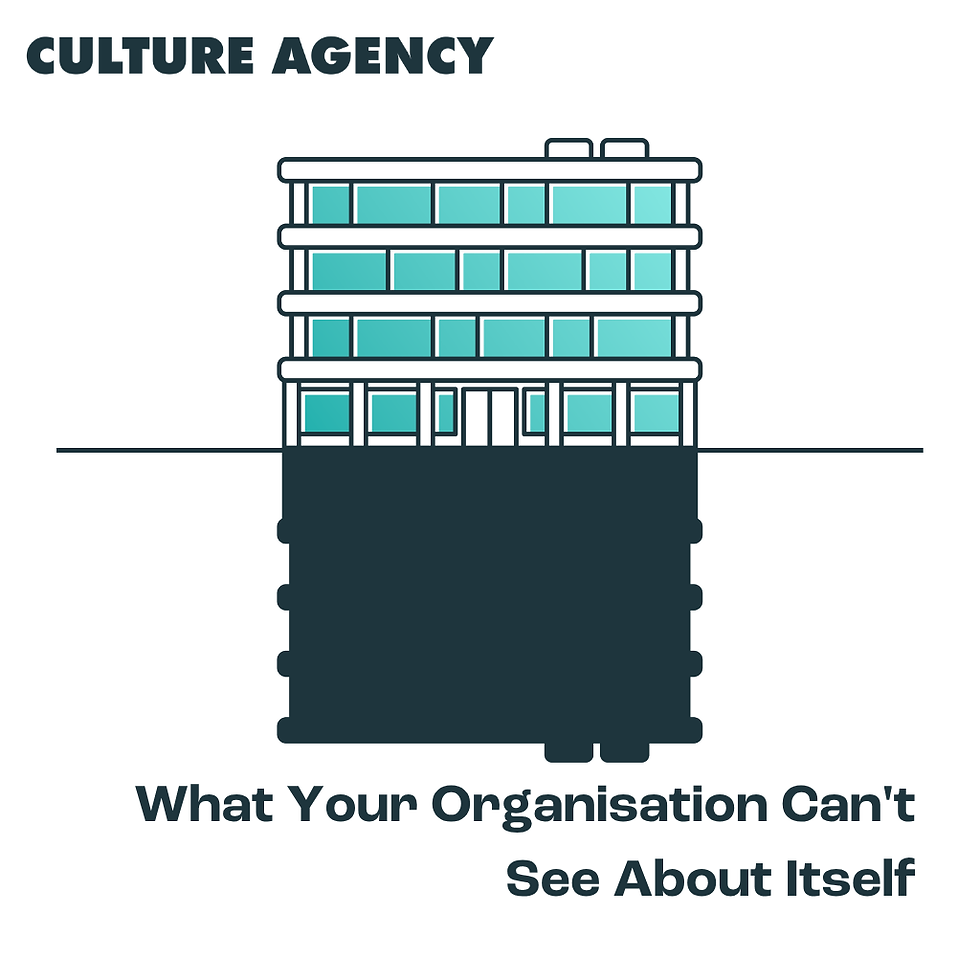
These patterns aren't random. They emerge from repeated interactions, reinforced by systems, modelled by leaders, and solidified over time. They become invisible to the people inside them. Like water to a fish, culture becomes the unexamined medium through which everything else happens.
What this looks like in practice
Consider a leadership team that claims to value innovation but rewards productivity against established business-as-usual metrics. The espoused value is innovation. The cultural pattern is that productivity is valued above innovation. Which one predicts behaviour?
These gaps between stated values and lived patterns aren't hypocrisy. They're usually invisible to the leaders who genuinely believe in what they're espousing. The patterns evolved over the years, shaped by systems and incentives that no one consciously designed.
The question is worth asking
When someone in your organisation says, "It's a culture issue," get curious. Ask them to be specific. What pattern are they observing? What behaviour has become normal that shouldn't be?
The vagueness around culture is a habit we can break. And breaking it is the first step toward working with culture deliberately rather than being silently shaped by it.